My first book, “I Live in a Chickenhouse,” presents what happened in my young life from the viewpoint of the preteen I was during the Nazi persecution. In simple words, I crafted a retrospective diary that both adults and children can understand.

INSPIRATION AND PURPOSE
In “I Live in a Chickenhouse,” I tell how, as a child, I hid from the Nazis in a chickenhouse with my parents and their friends, Heinz and Elli Graumann. I illustrated my memoir with drawings I made at age 9, helped by two talented amateur artists: my father and his friend Heinz. My art and theirs help.
CONTENT

CONTENT
INSPIRATION AND PURPOSE
My second book, “The Submergers” expands on my own Holocaust memoir. It is my father’s autobiography produced from his own writings. It covers his life in Germany, his escape to the Netherlands, and his further escape with his family after the Nazi invasion.
The “The Submergers” is my father’s autobiography, which he began immediately after Liberation. Father died well before completing the manuscript, and I did so using his notes on the backs of envelopes, diaries, and letters to his relatives.
My father clearly expresses his feelings as describes how his status degraded from an honored art historian in Berlin to a refugee on the run in Holland. His first priority after Liberation was recovering his status and resuming his professional work.

CONTENT
INSPIRATION AND PURPOSE
To provide easy access to my two memoirs, I prepared a “Guide for Teachers of the Holocaust.” It clarifies the relationships among the principals in the books; provides background on Dutch Jewry and the Nazis, presents points for discussion, and opens an overall look at prejudice and persecution
This Guide adds context and historical information to the two books that present the Holocaust through the eyes of father and son.
Specifically, the guide clarifies how the Heppner family and their friends are related to each other. it also provides context by summarizing the overall fate of Dutch Jews during the Nazi occupation Holland. Another section suggests points for discussion to help students gain a deeper understanding of the experiences of the Heppner family and of Jewish refugees like them.

CONTENT
INSPIRATION AND PURPOSE
In a separate book, “A Vision of Love,” I provide a look at the Holocaust from today’s viewpoint. I present my answer to the difficult question “what now?”
Joy L. Smith, a certified chaplain and mental health counselor, accompanied me on my lengthy journey from a reclusive Holocaust survivor to enthusiastic promoter of love. She commented revealingly in a Foreword: “Something striking happened. I was no longer with a stranger. [I see] no good reason why Jews and Christians cannot love and treasure one another. Why would we not want peace, justice, and equality to rule our hearts and guide our ways?’”
CONTENT
INSPIRATION AND PURPOSE
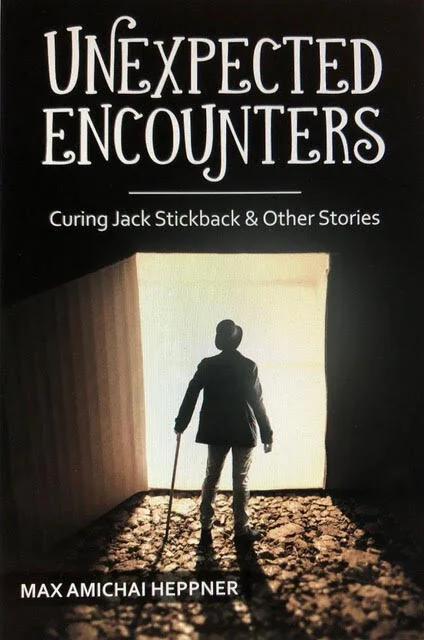
“Unexpected Encounters” looks at the brighter side of what people can learn from my encounters with life challengers. I examine how I have faced life, seeing what the Universe gave me to handle.
Unexpected Encounters is a collection of stories told as fables. You have probably come across sayings representing “the wisdom of the ages.” If you regard them as old saws, you can laugh them off, but as challenges fresh from my life, they will touch yours.
My unexpected encounters are wakeup calls; some come from people, like a senator, a rabbi, or a doorman. Other encounters are with angels, ghosts, or other imaginary creatures. An angel, for example the Angel Atzuviel, contradicts an old canard “Big boys don’t cry.” She points out that “Steeling yourself against sadness doesn’t work, but tears you shed can dissolve your pain.”
CONTENT
INSPIRATION AND PURPOSE
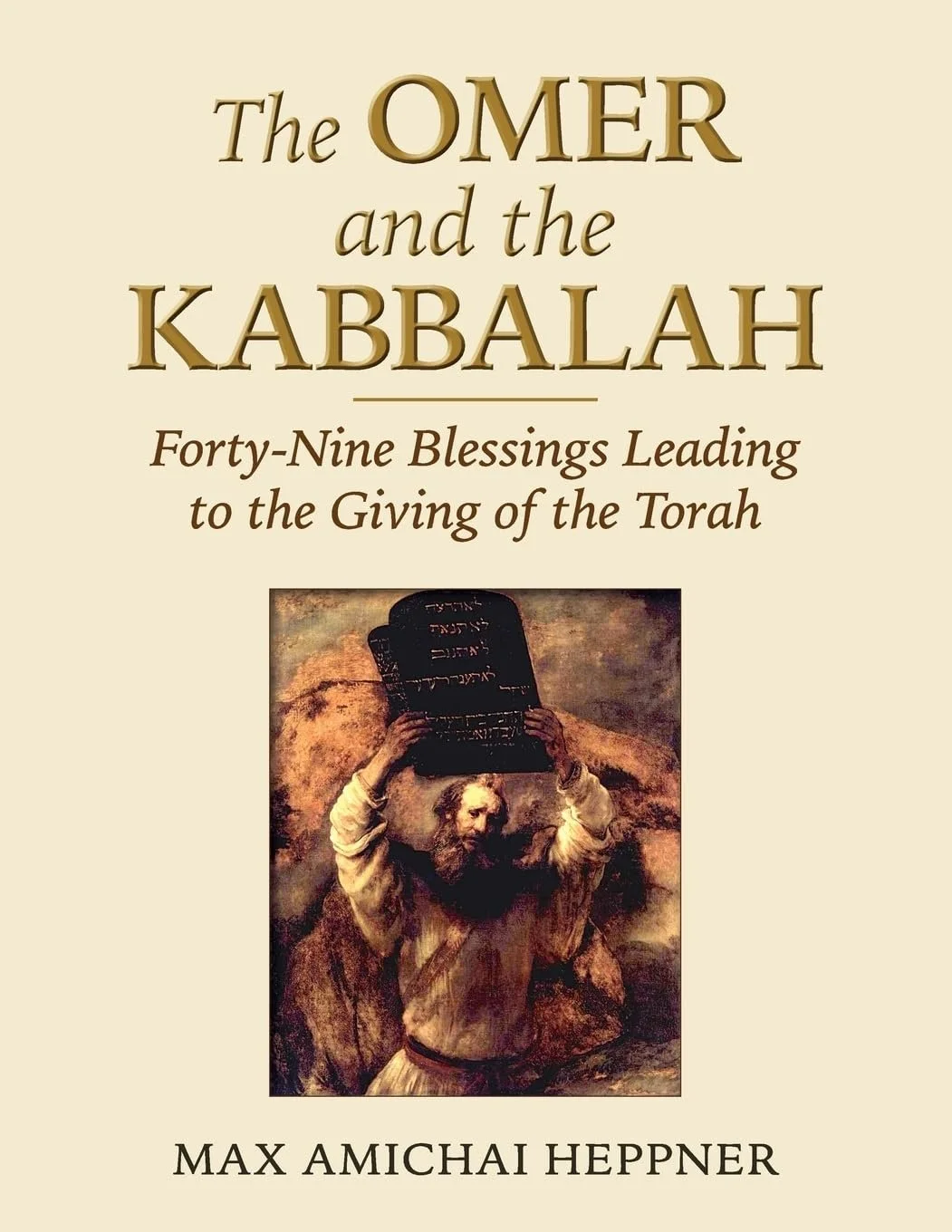
“The Omer and the Kabbala,” presents my my love for my Jewish tradition, aside from any reference to the Holocaust. The Omer cover the 49 calendar days between Passover and the Feast of Weeks. For each day, I select a representative teaching from the Kabbalah to lend meaning to the period of introspection.
The Omer [rhymes with Homer] is a meditative practice. Meditators say that it takes about 40 days to complete a spiritual journey. By extending the spiritual practice to 49 days, I take readers even deeper than the basic 49 days, using the Sefirot (Chakras) in the human body. We examine each of seven Sefirot in seven ways to bring a special blessing to each day.
Some blessings are illuminating and joyful. Others are more heavy and thoughtful. When we examine the heart chakra, for example, we cover seven ways of fully opening one’s heart to deeper insights.