EXCEPT FROM “THE SUBMERGERS”
A father’s story of escape and hiding from the Nazis
The conversation partners: Godfrey Langdon and Albert Heppner in Holland (1945)
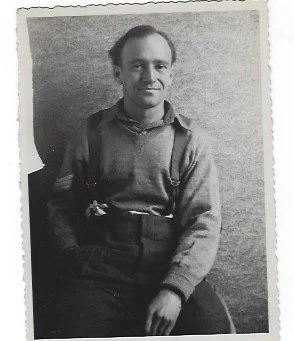
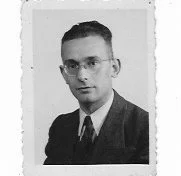
“How significant is my story really?” I said. I thought a moment of what was involved in conveying it to people . Then I said out loud: “Well, maybe people can understand the eclipse of civilization better if you don’t take them into the full darkness of it. But if so, it would be tough to decide where to begin.”
“You already mentioned a good starting point,” Godfrey said. “Begin where you first felt that loss of status, that slipping away of your identity that you told me about.”
I closed my eyes to think the whole thing through. Almost immediately I sensed the starting point: Behind my eyelids, I saw myself departing Berlin.
“Berlin,” I said out loud. Maybe too loud, because Godfrey jumped up a little. “Berlin,” I said again. “I loved that city like a farmer loves his homestead. More. There was so much more to love in that vibrant, majestic metropolis.”
“Yes,” Godfrey said. “And it’s the very place that we’re still busy bombing into rubble. How do you feel about that?”
“Torn,” I said. “Hopelessly torn. I listen to the news like an addict. I hear about the bombing, and my blood turns into ice. I visualize how the streets I wandered as a child are being turned into rubble. What a loss! But then my mind shifts to that seat of institutionalized gangsterism, that same Berlin, and I rejoice. Let them bomb it all into ruins, I think then. I can’t reconcile the two feelings. It’s agony.”
“Begin there,” Godfrey said simply.